Wednesday, December 30, 2015

2015: The year in Pictures

This is the first I've done it, but I thought it would be fun to recap the year in photographs. It seems especially fitting as it was a year of many firsts, as you will see. It was my good fortune that 2015 provided me with many opportunities to make photographs both at home and abroad. My selections will be personal and subjective but some of them also represent significant stories. Art and nature both are well represented, along with combinations of art & nature. In an effort to highlight the photos I will keep the captions brief. When there is a story and/or additional photos I will provide a link.


While I often find it hard to pick favorites, I do have a few, maybe three, which I'll identify as they appear. I begin with one of them, the "Big Bang" over the Calatrava (July 3.) The story also was a major one, about the abuse of executive power and the fate of O'Donnell Park.


Most of the photos will come in rough chronological order. On New Year's Day, Jan. 1, 2015, I found myself ensconced at the Lynden Sculpture Garden as one of their artists in residence. That day and throughout the year I photographed the environment (ice on the pond, above) and the sculptures ("Salem 7," below) with an eye to congruence and contrast.


On January 2 it snowed. I have too many favorite images from the Lynden to include here. But I did create a gallery for them on my website.


As you may recall, after it snowed we had snow cover--and bitter cold--for months. A bleak winter, seen here at Lakeshore State Park. Photo essay.


A long-awaited milestone was reached in February when the MMSD began to remove the last stretch of concrete channed from the Menomonee River. Photo essay.


I also returned to Starved Rock State Park, IL in February. My fourth visit and the first time I saw an eagle up close. Photo essay.


February was a busy month! The Lynden Sculpture Garden held its Winter Carnival, which featured this inflatable and interactive sculpture by Claire Ashley. The story.


Trying to escape the seemingly endless winter, in March I went to New Orleans to attend the Society of Photographic Education national conference. When it wasn't raining, there was fog.


In April I spent a night near Horicon Marsh National Wildlife Refuge. Witnessed a controlled burn in progress and got another of my favorite images in a burned-over area. Photo essay.


Another long-anticipated change came when the Mandel Group began construction of their Echelon apartments on the County Grounds. They dwarf the four remaining historic Eschweiler buildings, two of which were being demolished as the year ended. One of several photo essays.


Earth Day saw the beleaguered Kinnickinnic get cleaned up. Although I'd been photographing all of Milwaukee's rivers off and on for years, this was the year that the KK became a major project for me. The cleaning of debris was the tip of the iceberg as MMSD ramped up its multi-year effort to remove concrete and restore a more natural river.


The highlight of the Earth Day event was when a water scientist from UW--Madison dyed the river red. The story.


Working with the MMSD one of my responsibilities was to document the deconstruction of houses that needed to be removed from the KK River floodplain. The most poignant thing I found in advance of the salvage and wrecking crew was this bedroom wall painting.


A makeshift memorial next to a railroad bridge crossing the KK provided an even more sobering image.
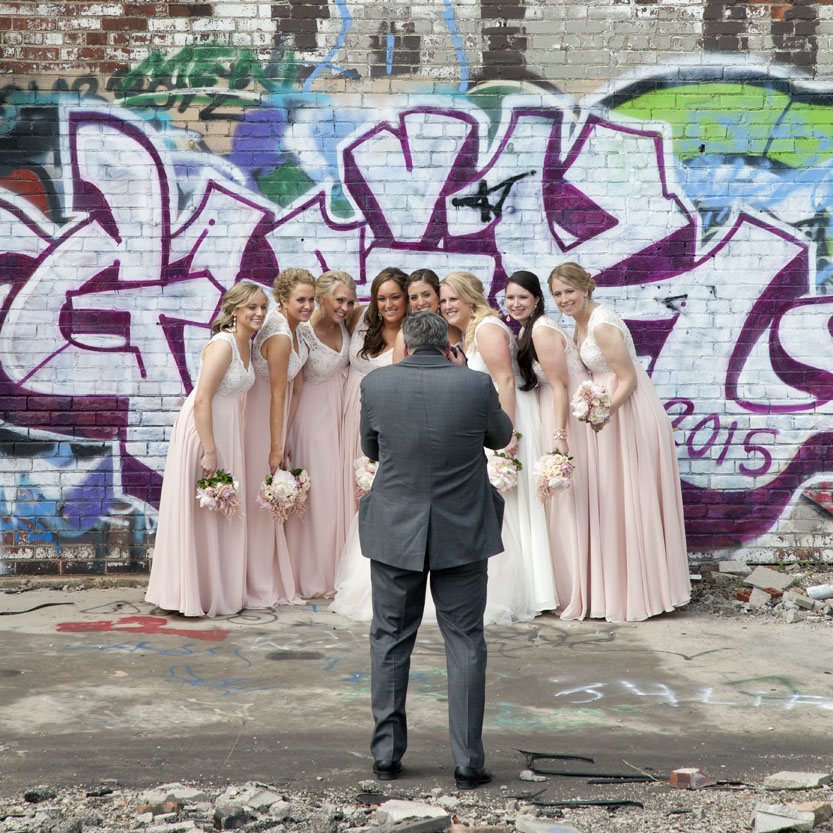

On a lighter note, while wandering the abandoned industrial Solvay property where the KK merges with Milwaukee's inner harbor I found this wedding party picking their way daintily among the ruins to find a backdrop for their group portrait. More KK River photos on Flickr.


In May the Lynden Sculpture Garden celebrated the 5th anniversary of being open to the public. Among other festivities, there was a display of bonsai trees. The story.


If there was a single highlight of my year at the Lynden it was the performance in June of the the Fairy Queen Fantasy, a combined effort of Danceworks and Milwaukee Opera Theater. Photo essay.


Peregrine falcons, and their protector, Greg Septon, were among my favorite subjects this year. I visited five nesting sites where Septon banded fledglings. This one is atop the Jones Island sewage treatment plant. The story.


I left town in June. On a hike at Devil's Lake State Park I came across these two young women attending to their cell phones high above the lake.


I also made my first visit to Portland, OR. I'd long wanted to visit the country's largest urban forest (above), which was both beautiful and well-appreciated by Portlandiers.


At the renowned and very popular Japanese Gardens I was struck by the similarities and contrasts between the formal gardens and the wilderness park. The trip to Portland inspired one of my most important essays of the year: "Could Milwaukee be a 'green' destination?"

image courtesy William Zuback
As usual, I attended many wonderful art exhibits throughout the year. This is from "The Dress Series" by William Zuback, who I interviewed for Art City Asks, a Milwaukee Journal Sentinel blog feature.


Among multiple trips to Chicago, this ceramic installation at the National Museum of Mexican Art was especially compelling. Entitled Deportable Aliens, it is by Rodrigo Lara Zendejas. The story.


"Interval," by David Hartt, a massive multi-media installation at the Art Institute of Chicago, was also very moving.


While wandering the streets of Chicago I found this bus cleverly disguised as a forest. Art, nature, lifestyle, advertising--where do the lines blur or cross?

My own artistic moment of 2015 was the exhibit of work done during my 2014 year of residency in Milwaukee's Menomonee Valley, displayed at Walker's Point Center for the Arts. My image of Mayor Tom Barrett walking in Three Bridges Park may have been what drew the mayor himself to see the show.

Another first this year: I enjoyed one of the state's premier outsider art installations at Wisconsin Concrete Park. Up north in Phillips, WI, it features the work of Fred Smith.

The reason I was up north, actually, was for a bit of R&R. My wife (in the kayak) and I stayed in a cabin in Manitowish Waters, right on the Manitowish River.


While working on the essay, previously mentioned, about why Milwaukee could be a green destination, I spent a lot of time exploring Milwaukee's parks, some quite familiar (Lake Park, above) and a few for the first time. To see selections from my explorations, go to my Mke Parks Flickr album


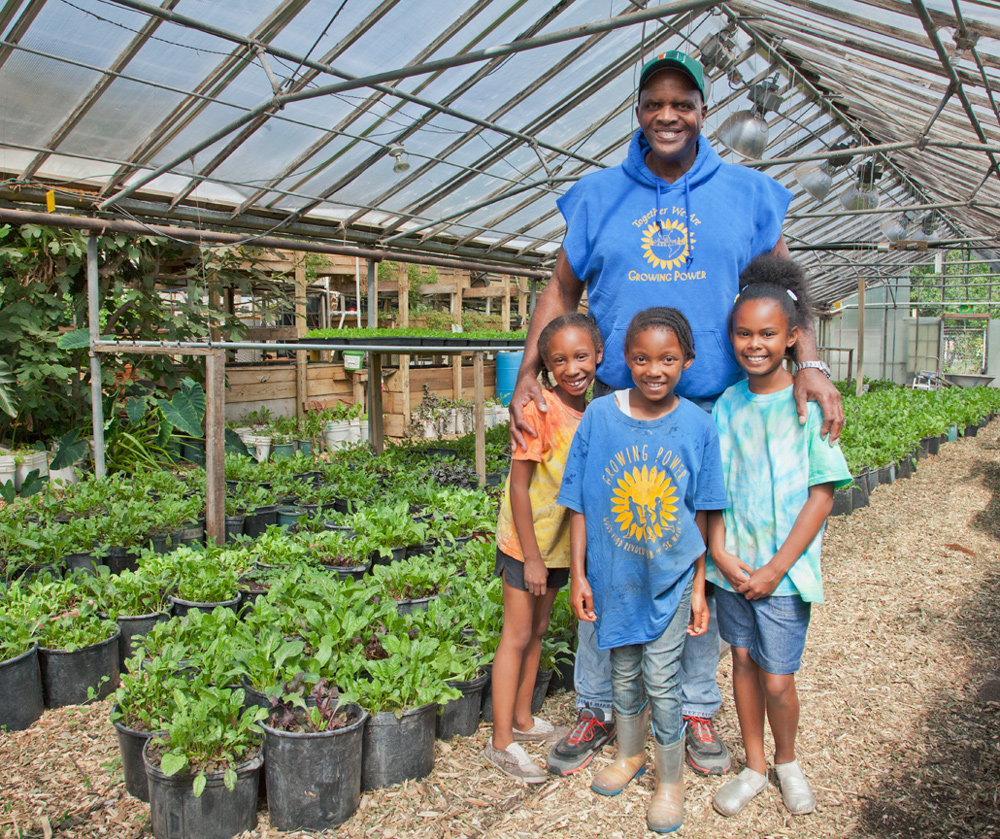
In addition to the parks, I was able to interview some of Milwaukee's human resources, including Will Allen, founder of Growing Power. The story.


Explosions of trains carrying crude oil caught the attention of a local advocacy group called Citizens Acting for Rail Safety. In September they staged a river rally to raise awareness that the same potentially lethal trains run through downtown Milwaukee. The story.

More travel in October. First, I revisited Ghost Ranch, my spiritual home in New Mexico, for the umpteenth time. But nothing is ever the same. This time I managed to catch a rainbow behind the always dramatic Battleship Mesa (above).

From NM I flew to Australia--yet another first. These two lorikeets in a wildlife sanctuary are just a taste of how exotic that proved to be. More photos (yes, kangaroos and koalas included) in my Flickr album.


From Australia to New Zealand. Of the several stories I wrote up about my adventures, my favorite is of volcanic Rangitoto Island, in the gulf off Auckland, NZ. The story.


Of course, art featured in my antipodean travels. I especially loved seeing the work of indigenous artists. I visited (and posted stories/photos) about museums in Adelaide, Melbourne and Auckland.


At the Hal Tyrrell Trailside Museum of Natural History in River Forest, IL, I snapped this portrait of a one-eyed red-tail cleverly named "Ethan Hawke."

This is a snapshot of Lisa Sutcliffe, curator of photography at Milwaukee Art Museum, taken at the Photo Council holiday party. That's cool in itself, but what's really important about this image? It was the very first photo I shot with...drumroll...my new iPhone. 


Of course, after that I had to do my first selfie. I got my 4-year-old granddaughter to help me with that. Naturally, she upstaged me.

Next I jumped on the Instagram bandwagon. Fun! Of the many photos I uploaded to Instagram at the Lynden Sculpture Garden, mostly of the iconic, monumental sculptures, this one of the bench and puddle was most popular.

Speaking of popular, my photo essay of this stormy day on Lake Michigan went locally viral. See it for yourself.


Last but hardly least, another of my favorites. This one, appropriately, is from the Lynden Sculpture Garden. I loved being in residence there. Quite a privilege. Since it's not obvious, I must say that this is an unmanipulated, trick-free photo. One of those rare miracles of serendipity that make photography marvelous. The blue out-of-focus foreground is part of a sculpture, "Quartet," by Forrest Myers. Art and nature.  (Lynden Sculpture Garden Flickr album.)

Have a wonder-full New Year!


Monday, December 21, 2015

Spotlight shines

Yes, I know all the attention lately has been on that other movie. And, yes, I will go see Star Wars, episode whatever, the Force Awakens. It's not only wildly popular but getting good reviews. I'm looking forward to it. But I'm in no hurry.


I'm here to recommend another really good movie: Spotlight. This is no action adventure. There is no violence or sex, incredibly. It's just the best movie about journalistic integrity since, well, I think it's better than "All the President's Men." I can't think of a better one.

And it's not just a gripping story about investigative journalism, a sadly dying branch on the tree of contemporary media. It deals with one of the more compelling and tragic issues of our time, the abuse of children by priests and the cover up that enabled it to happen.

Click here to see the trailer.

If you don't catch it soon it will be gone from theaters. But add it to your Netflix queue!


Thursday, December 10, 2015

Season's Greetings!

From the Lynden Sculpture Garden
2015 Artist in Residence

Sculpture: Salem 7, 1967, by Antoni Milkowski

May Peace settle like snow around you

and the Earth grow calm


I have had the privilege of serving as Artist in Residence at the Lynden Sculpture Garden this year. I am grateful to the staff there with whom I have worked. I've enjoyed meeting many other artists, some also in residence, some exhibiting, some leading workshops and others passing through. Most of all I have enjoyed the beauty and serenity of the place.

The mission of the Lynden Sculpture Garden is to promote the enjoyment, understanding, and appreciation of art and the environment. Public programming focuses on the intersection of art and nature. The setting integrates the Lynden’s collection of monumental outdoor sculpture with the natural ecology of the landscape.

The Residency Program is designed to enable artists to immerse themselves in Lynden’s sculpture collection, its landscape and the surrounding community. The residency program invites local artists to engage with the Lynden over a period of time, mostly commonly across four seasons.

To learn more about the 2015 residency and find links to many more images from the year go to the Lynden Sculpture Garden project page of my website.


Sunday, December 6, 2015

Latino Arts: Gardens, Gods and Grids by Dara Larson

The full title is a mouthful: Gardens, Gods and Grids: Retracing Nature, Culture, & Infrastructure in the Americas. The multimedia exhibit by Milwaukee artist Dara Larson, which fills the huge Latino Arts Gallery at the United Community Center, is also a lot to take in.


As the title suggests, the work is from "the Americas." In this case it means throughout North, South and Central America. Larson clearly has done a lot of traveling. She did confess to me that she's been collecting materials and images over many years. However, the current work is recent.


Most of the prints in the exhibit are digital collages. Larson's images begin as photographs, but her complex layering and collaging techniques demolish normal perspective and any kind of typical photographic picture plane.


The center of the gallery is dominated by a day-of-the-dead style ofrenda, or shrine. Larson is a regular contributor to official Day of the Dead exhibits, so it comes as no surprise to anyone familiar with that work. But this ofenda is made up largely of old travel guidebooks and maps that show the varied destinations.

Gardens, Gods and Grids runs through February 26, so there is plenty of time to get in there to see this fine show.

The Latino Arts Gallery is open Monday through Friday, 9:00 a.m. - 8:00 p.m.

All images courtesy Dara Larson.


Tuesday, December 1, 2015

The split personality of the NGV


National Gallery of Victoria, Melbourne, Australia

From "Enclave," by Richard Mosse
The NGV, as it is commonly known, has a split personality and is literally divided into two campuses.

The Ian Potter Center: NGV Australia specializes in art of Australian origins, both indigenous and not, from colonial to contemporary. It is a major responsibility for a continent-sized country.

But then again, the NGV International, like so many “encyclopedic” museums in other cities around the globe, attempts to represent the entire rest of the world.

I spent more time in the Ian Potter Center but I managed to catch a few things at the International as well.

Here is a very small selection of things that caught my eye.

Ian Potter Center: NGV Australia

In this multi-media installation by Adam Goodrum, the immaterial aspects—cast light and shadows on the walls—seemed more substantial than the sculptural bit made of polymer resin at its center.

I very much enjoyed the indigenous works on display, some of which were historical and some contemporary.

This detail from a painted Eucalyptus pole was made in 2003 by Gawirrin Gumana of the Guyamirrilil people of the Northern Territory.

I especially enjoyed seeing traditional works displayed in proximity to more modern and non-indigenous works of art.

Having recently experienced Australian wildlife for the first time ever, I was drawn to indigenous representations such as this kangaroo by Robin Nganjmirra of the Northern Territory.

I’d seen kangaroos several times in the wild by this point in my trip. This one, however, was in a wildlife park, which enabled me to get close up and personal. In fact, they eat out of your hand like goats in a petting zoo.

However, I learned the hard way not to let the emus eat from my hand. Fierce creatures; they definitely bore a familial resemblance to velociraptors.

This sculpted representation was made from actual emu feathers and other fibres by Treahna Hamm of Wodonga, Victoria.

This modern piece was made circa 1962 by Godfrey Miller and titled Trees in Quarry. Like many Australians, Miller was educated in Europe before moving back to Sydney and an art career.

My favorite works in the Ian Potter Center were a roomful of altered photographs by Tony Garifalakis. This set of three demonstrates the tone, technique and style of the rest. Collectively called Bloodlines, The suite of 12 portraits of royal families have been ruthlessly defaced with black enamel paint.

I also liked the architecture of the building, which clearly eschews the straight and plumb of traditional structural forms. The exterior of the building, which I neglected to photograph (mentally kicking myself), looked like a child’s play structure that had been knocked down and rebuilt several times before the child went on to other things. The aerial shot (above) I borrowed from a website called Culture Victoria.

This is a shot of the interior showing a little of the complexity of the spatial relationships and off-kilter lines of the architecture.

Outside, there were several very intriguing, if hard to decipher, relief sculptures set into the very irregular paving bricks of the huge plaza.

NGV International

I can’t do this museum justice. I blitzed past most of the collection in order to see contemporary work on the top floor. Just three examples:

This sculptural mural made of painted wire by Mira Gojak is entitled “Unending herd of blue.” The artist intended it to represent the progression of Western art from the earliest cave paintings through Renaissance development of perspective and chiaroscuro to Modern art’s concern for the picture plane. Not to mention the tension between the drawing-like linearity and three-dimensional space. (Then again, maybe it wasn’t the artist who had all those grandiose intentions, but the curator who wrote up the wall label.) Sarcasm and hyperbole aside, I enjoyed its scale and playfulness.

This painting, slashed as you see it, is by an “American” named Titus Kaphar. When visiting a foreign museum, even the U.S. artists represented are unfamiliar ones. The work is entitled “Stripes.”

The real reason I went to the NGV International was to see “Enclave,” the video installation by Richard Mosse, which I saw listed in the promotional brochure at the Ian Potter Center. I’d heard of Mosse and seen stills of his powerful infrared images, taken in war-ravaged Democratic Republic of the Congo. But stills cannot convey the power of the video. Even a single video screen online cannot really represent the power of the installation, which employs at least 6 enormous video monitors at various angles throughout a large, darkened gallery. The monitors cannot all be taken in at once and if you move around to see them all it is as if you are amongst the people in the videos themselves. Very immersive and the more moving for it.

To see an interview with Richard Mosse and get a sense of the content of the video, go to Vimeo.

“Enclave” was my favorite work of art of all that I saw in Australia--and I saw a lot of great work! Click here to read my review of the Adelaide Gallery of Art.

Richard Mosse image credits: Louisiana Museum of Modern Art website.

Sunday, November 29, 2015

Chicago: City Creatures and the Day of the Dead

A day trip to Chicago took me to three distinct art exhibitions in two very different venues.

At the Peggy Notebaert Nature Museum in Lincoln Park, the main attractions are live butterflies and family friendly interactions with natural history and contemporary ecological issues. But they host rotating exhibits of art related to nature as well.


The current show, called City Creatures: Animal Encounters in Chicago's Urban Wilderness, is based on a blog and a recently released book by the same name. It was curated and organized by the Center for Humans & Nature. The theme of the artworks, as the name suggests, deals with animals that the artists have encountered in Chicago. Among the many artists represented, who worked in a variety of mediums, were distinguished photographers, Terry Evans and Colleen Plumb.


A trip to Chicago in November is rarely complete without a stop at the National Museum of Mexican Art in the Pilsen neighborhood. Their annual Day of the Dead exhibit is always spectacular and--unlike most--seldom predictable. True to form, this year's exhibit, entitled La Muerte Niña: Day of the Dead, was more like a traditional art exhibit.


There were a dozen or so ofrendas (altars honoring the dead), a few of which were even more traditional in form than this one devoted to the singer Selena. 


Most were far less traditional, such as this one, complete with a marquee in blazing lights and titled Santo in the World of the Dead: Altar to the Silver Masked Wrestler / Santo en el mundo de los muertos: ofrenda al enmascarado de plata.


However, the ofrendas were widely spaced and the intervening wall spaces were hung with more traditional works of art, mostly paintings. My favorite was this very atypical, enormous installation of mixed media variations on the typical Day of the Dead skull motif (above and below, details). Each of the 40 or so "faces" is about 3 feet tall and the grid of them wraps around two sides of a huge gallery.


Here is a closer look at a few of the individual skull designs, many of which dealt with topical issues like immigration and climate change, among many other themes. Unfortunately, I didn't make a note of the name of the artist or artists who created them.


There are four concurrent exhibits on display at the museum. This one (above and below, details), by Rodrigo Lara Zendejas, was especially compelling. Entitled Deportable Aliens, it appears at first glance to be a set of shelves bearing busts. Each porcelain bust, however is sculpted in the form of a thumb and many of the highly expressive faces are composed of only partial facial features.


The thumb forms suggest the fingerprinting process required of anyone who is apprehended (such as immigrants), with all the identity issues that connotes. Their placement on the shelves symbolizes the commodification of individuals, subject to being bought and sold or deported at the whim of our government and society. The larger-than-life scale of each "bust" or thumb makes the installation especially powerful.


Monday, November 2, 2015

Tarnanthi: Art in Adelaide, Australia


-->
Tarnanthi is an aboriginal word from the Kaurna people of South Australia. It means to come forth or appear – like the sunrise, or a seed sprouting. For many cultures, first light represents a new beginning. I was fortunate, not only because I was able to travel to Australia and visit the Art Gallery of South Australia but also because this exhibit called Tarnanthi had just been unveiled. Billed by the museum as the “most ambitious exhibition of Aboriginal and Torres Strait Islander art in its 134 year history,” Tarnanthi was more ambitious even than that. It really is a series of 21 distinct exhibitions and those exhibitions were just part of a citywide festival of indigenous arts. 

Here is but a very small sample of what I saw at the Art Gallery of South Australia.


Traditional indigenous paintings on eucalyptus bark by various indigenous people.


Detail of “Dead man” from the Gunbalanya people of western Arnhem Land in Australia’s Northern Territory.


This is a detail of just one of several rooms devoted to the weavings of contemporary indigenous artist Yvonne Koolmatrie, of the Ngarrindjeri nation. The weavings reference traditional eel, fish and animal traps, along with scoops, baskets and other utilitarian woven objects. Koolmatrie, whose art practice was inspired by her experiences as a seasonal worker and a “lifelong relationship with the river,” became a “pivotal figure” in contemporary aboriginal art. She represented Australia in the 1997 Venice Biennale.


One of the things I liked best about the installation of the permanent galleries in the museum was the placement of contemporary works amongst traditional ones. The piece in the center of this gallery features the headless, skinned bodies of two horses. Called “We are all flesh,” by Belgian artist Berlinde De Bruyckere, it has been one of the more controversial ones, according to the museum staff person I spoke with.


This series of portraits was created between 1944 and 1947 by Australian artist Sidney Nolan.


One of the things I did not care for was a penchant for hanging paintings and framed works on paper on mirrored walls positioned in the middle of galleries. I found it distracting to see the reflections of other works of art on opposing walls, not to mention people moving through the gallery. Here is one of Hokusai’s famous woodcut prints of “Fuji in Fair Weather.”


An untitled photograph by a contemporary Swiss artist named Claudio Moser seems to float in the doorway between two galleries.
  
This is the second of a series of stories about art experiences during my recent foray to Australia and New Zealand. To read the first, click on Toi o Tāmaki.

To read stories from my excursion to the Antipodes, go to Urban Wilderness. To see a series of photos from Australia and New Zealand, go to my flickr album.